Why We Win: 7 Compliance Standards = Defensible Moat
Our technical moat is built on regulatory-grade compliance that takes years to replicate. While hardware companies race to build humanoid robots, we're building the only FDA-compliant software that makes them safe for healthcare.
Compliance Pillars:
Medical device quality management
Medical device software lifecycle
EHR interoperability
Electronic records & signatures
Patient data privacy & security
IEC 81001-5-1 health software
ISO 14971 risk analysis
Why Competitors Can't Catch Up:
- Hardware companies lack regulatory software expertise
- Software companies lack medical device experience
- Building this patient-centric compliance stack takes 3-5 years and $10M+
- We're already 2 years ahead with HMS/JHU validation
Our advantage: By the time competitors start, we'll already be the established standard.
Technical Architecture
Physician-in-the-Loop (AIITL) Framework
At the core of our Safety OS is the Physician-in-the-Loop (AIITL) framework—a governance model that makes the human clinician the pilot, not just the brake. Unlike fully autonomous systems that pose unacceptable liability risks, our architecture ensures that all critical care decisions require physician approval before execution.
🔗 EHR Integration & HIPAA Compliance
Secure, Hybrid Healthcare Ecosystem Architecture (HHEA) hosted in the EHR Provider cloud (e.g., Epic, Cerner, Allscripts) ensures real-time patient data access with HIPAA compliance and full audit trails.
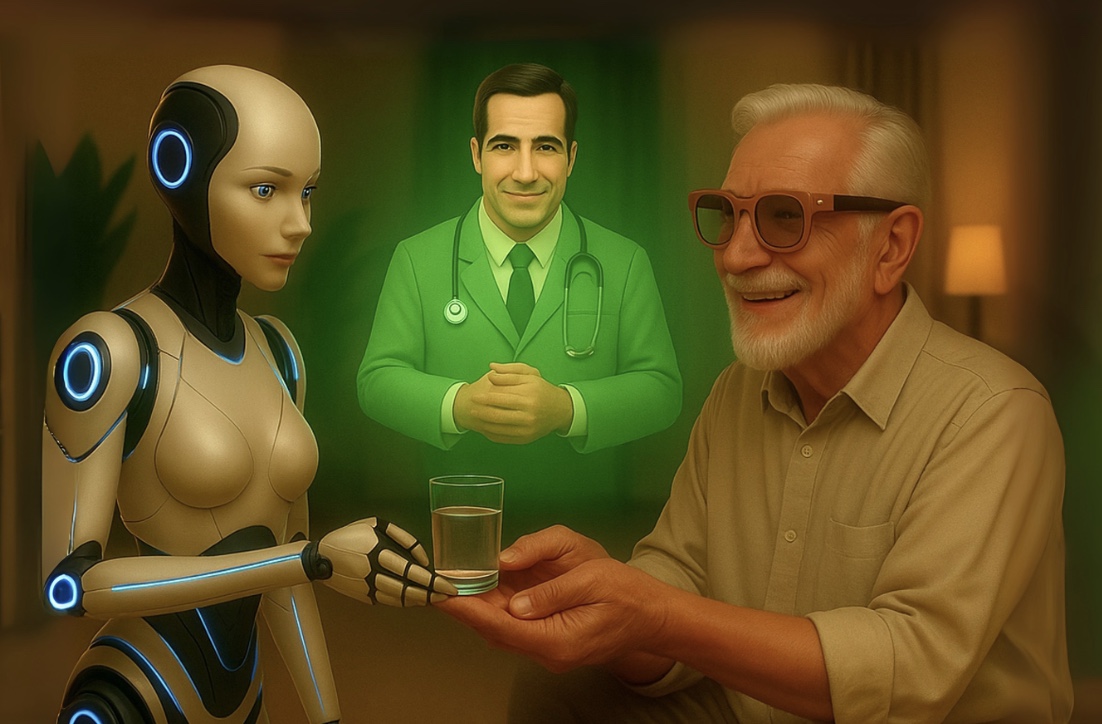
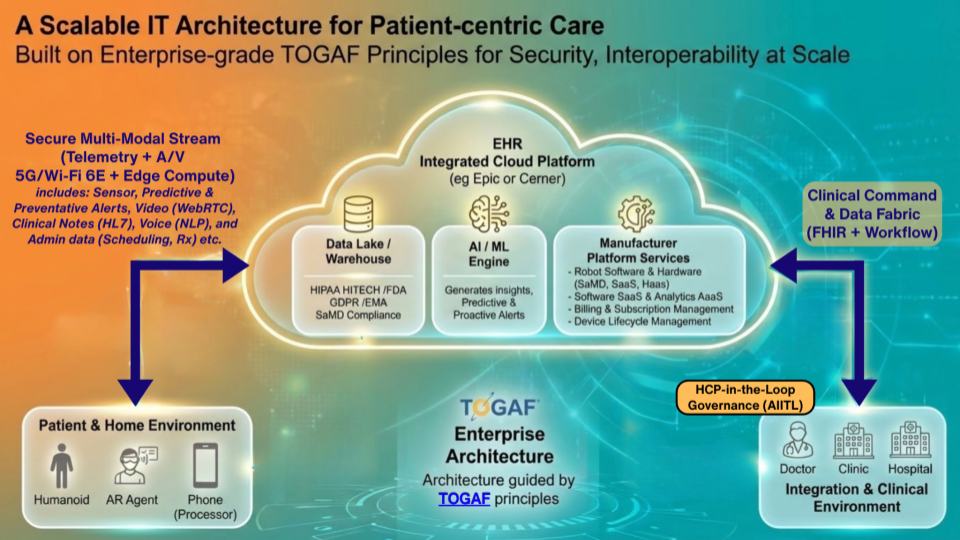
Enterprise Architecture: TOGAF-based Hybrid Healthcare Ecosystem Architecture (HHEA) with HIPAA/GDPR compliance
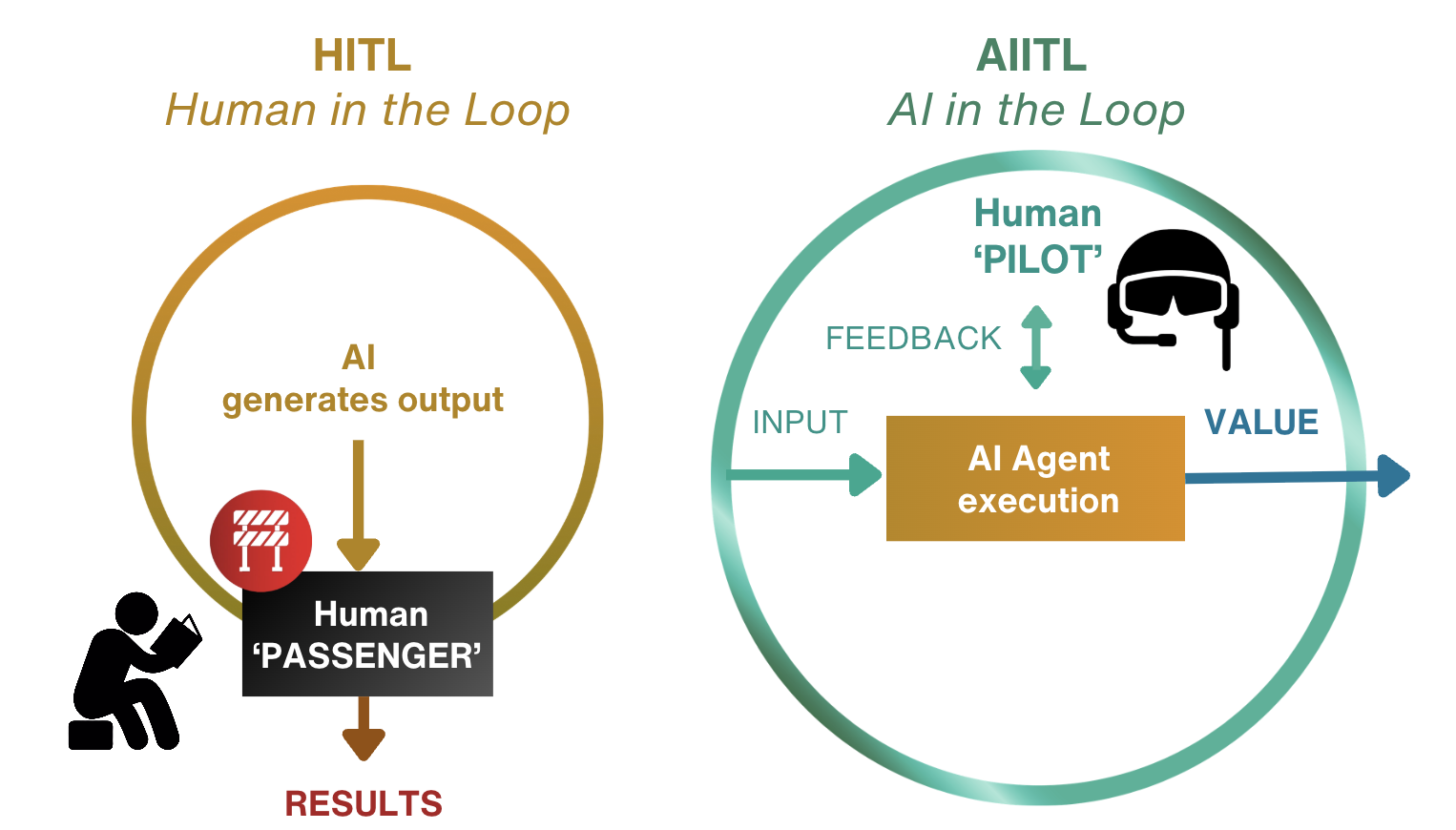
Key Difference: HITL makes humans passive observers; AIITL makes them active pilots with full control over AI execution.
Modular Platform Design
Our modular software design allows robotics manufacturers like Unitree and Boston Dynamics to plug our Safety OS into their hardware platforms, creating a scalable ecosystem where we become the de facto standard for compliant humanoid healthcare.
With a projected 49x ROI and $279M NPV, this capital-efficient model positions us to capture significant value in the emerging $1 Trillion humanoid healthcare market.